In an era where attention is the most expensive currency, Spotify seems to be getting more serious about ensuring that every second we spend on the app really feels “worth it”—not just background noise while scrolling aimlessly.
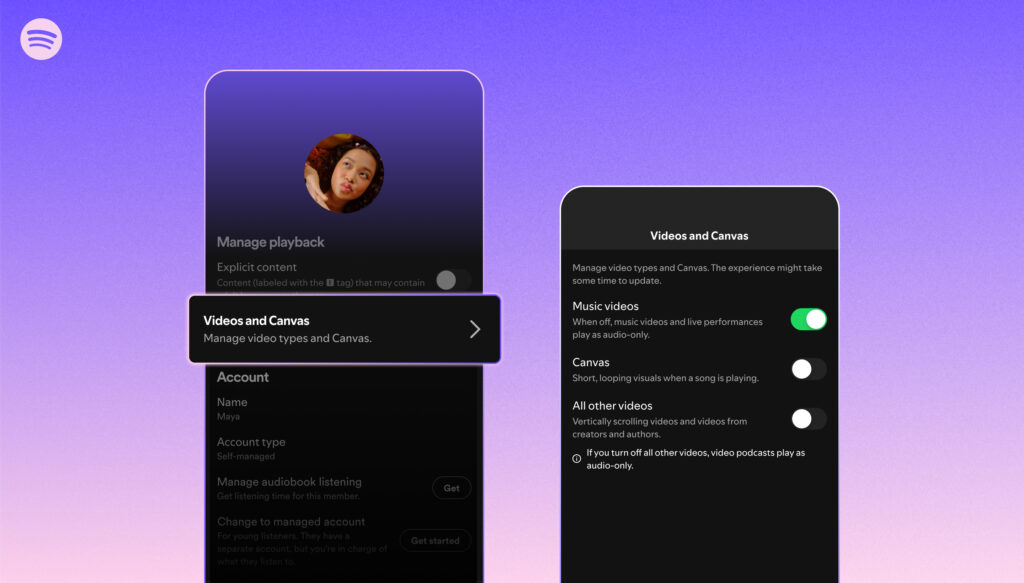
Most recently, this Swedish streaming platform introduced new video controls which gives users more power in controlling how they experience content—whether to keep the focus on the audio, or add more immersive visual layers.
Control in Hands, Not Algorithms Alone
So far, Spotify is known for personalization such as Flavor Profile, Requested Playlistsuntil Smart Filtersnow the approach is clearer: not just smart recommendations, but also giving full control to the user.
And it turns out, this isn’t just a feature gimmick. A global survey by Burson of 8,400 respondents showed:
- 93% of users want more control
- 92% feel Spotify helps them get closer to the things they love
In short: people want curation, but still want to hold the remote themselves.
From Passive Scrolling to Intentional Listening
In the midst of an increasingly brutal doomscrolling culture, Spotify is trying to take a different position: an experience that is more “intentional”, not accidental. Especially for Gen Z—according to research by Edison Research, as many as 86% of them listen to music or podcasts to improve their mood. So it’s not just entertainment; it’s a kind of self-regulation tool.
With the new video controls, users can:
- Turn off visual looping Canvas
- Eliminate videos in podcasts or music
- Or just enjoy a richer audiovisual experience
Everything can be adjusted via a simple menu: Settings → Content and display
And what’s interesting is that these preferences apply across devices—from mobile to TV. So once you set it, you’re done. No need to bother resetting every time you open the device (life is complex enough without that).
Family-Friendly, But Still Flexible
For family plan users, Spotify also adds an additional layer of control. Account managers can determine whether other members—especially children—can access video content or not.
Spotify Chief Public Affairs Officer Dustee Jenkins emphasized that digital experiences—especially for families—must remain safe and relevant. Because to be honest, not all visual content is suitable for all ages, even if the song sounds innocent.
So, Is It About Features or Philosophy?
On the surface, this is just a settings update. But if you dig a little deeper, this is a signal of a new direction: Spotify wants to be more than just a streaming platform—they want to be experience platform which can be shaped according to the user’s mood, time, and even mental condition.
And in an increasingly noisy world, the ability to say “just audio” or “add visuals to make it more alive” is no small feature. That’s control. Sometimes what we need isn’t more content—but more control over what we consume.
PakarPBN
A Private Blog Network (PBN) is a collection of websites that are controlled by a single individual or organization and used primarily to build backlinks to a “money site” in order to influence its ranking in search engines such as Google. The core idea behind a PBN is based on the importance of backlinks in Google’s ranking algorithm. Since Google views backlinks as signals of authority and trust, some website owners attempt to artificially create these signals through a controlled network of sites.
In a typical PBN setup, the owner acquires expired or aged domains that already have existing authority, backlinks, and history. These domains are rebuilt with new content and hosted separately, often using different IP addresses, hosting providers, themes, and ownership details to make them appear unrelated. Within the content published on these sites, links are strategically placed that point to the main website the owner wants to rank higher. By doing this, the owner attempts to pass link equity (also known as “link juice”) from the PBN sites to the target website.
The purpose of a PBN is to give the impression that the target website is naturally earning links from multiple independent sources. If done effectively, this can temporarily improve keyword rankings, increase organic visibility, and drive more traffic from search results.