
In the criminal legal system, the sentence is not always uniform for each case. Judges have the authority to consider various relevant factors to determine fair and proportional punishment. This article will discuss in depth about the punishment of punishment and relief of punishment, two important concepts in criminal law that affect the determination of punishment for perpetrators of criminal acts.
Also read: Criminal Callia and Prison in the Indonesian Criminal Law System
The definition of weighting and relief of punishment

Punishment is when someone who has committed all elements of a criminal offense, but there is a reason to aggravate his actions so that the sentence that will be received will be more severe. That is, an increase or addition of sentences imposed on the perpetrators of criminal acts, due to certain factors that are considered to aggravate the perpetrators’ mistakes. These factors indicate that the perpetrators have a higher level of error or that the criminal offenses committed have a greater impact.
Also read: Additional criminal crimes in criminal cases: Definition, Types, and Case Examples
Punishment is when someone has fulfilled all elements of the article on criminal acts, but there are reasons that make the perpetrators threatened with lighter punishment. That is, a reduction or relief of sentences imposed on perpetrators of criminal acts, because of certain factors that are considered to alleviate the perpetrators’ mistakes. These factors indicate that the perpetrators have a lower level of error or that there are certain circumstances that make the perpetrators deserve to get relief.
Also read: Execution of Court Decisions in Criminal Cases
Legal Basis for Postishment and Frames of Penalties in Indonesia
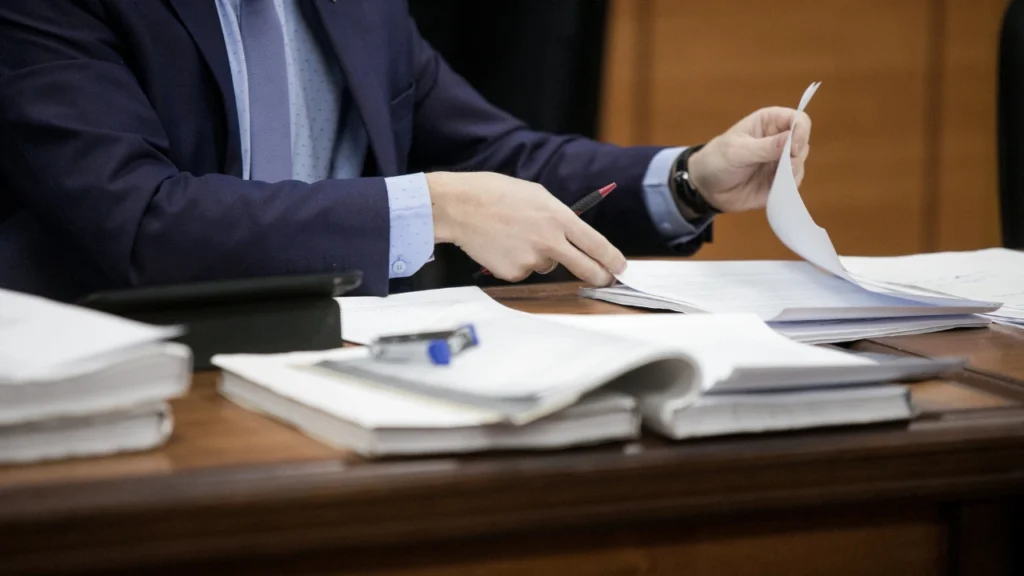
Legal Basis for Penalty and Frames of Penalties in Indonesia is mainly regulated in:
- The Criminal Code (“KUHP”), contains several articles governing conditions that can burden or alleviate punishment. For example, the articles governing the repetition of criminal acts (recidivists), crime planning, and a state of drunkenness.
- Special Law. Some special laws governing certain criminal offenses also contain provisions regarding the weighting or relief of specific sentences for the criminal offense. For example, related to the ballast, namely Law Number 35 Year 2009 concerning Narcotics or Law Number 31 of 1999 concerning Eradication of Corruption Crimes, and related to the FINGERS, namely Law Number 11 of 2012 concerning the Criminal Justice System of Children.
- Jurisprudence. Court decisions that have legal force can also be a source of law in terms of weighting and relief of punishment. Judges often refer to previous decisions that have similar cases to determine fair punishment. For example, Supreme Court Decision Number 572 K/PID/2006 of 2006, Supreme Court Decision Number 2658 K/Pid.Sus/2015, and Supreme Court Decision Number 115 PK/Pid.Sus/2017.
Also read: Differences in Free and free decisions in criminal law
Factors that burden the punishment (burdensome factors)
Factors that can burden the punishment (burdensome factors) Among others:
- Recidivist (repetition of criminal acts). If the perpetrators have been sentenced before and committed more criminal offenses, the punishment can be agreed.
- Abuse of power. If committing criminal acts that violate job orders, such as Article 52 of the Criminal Code.
- Combined or two or more offenses (as it happens or Fight). If the combination of criminal acts or repetition of criminal acts that do not have a decision of a judge with a permanent power so that it will be tried as well as the actions they repeat, such as Article 63 to Article 71 of the Criminal Code.
- Crimes committed by officials or abuse of positions, as in Article 52 of the Criminal Code.
- The use of national flag facilities. If a crime committed using a national flag, as in Article 52A of the Criminal Code.
Also read: Terrorism Criminal Acts: Understanding, Types, and Legal Sanctions in Indonesia
Factors that ease the punishment (Relievement Factors)
Factors that can ease the sentence (Relievement Factors) Among others:
- Confession guilty. If the perpetrator acknowledged his actions and regretted, the punishment could be relieved.
- Coordinate well with law enforcement. If the perpetrators work together with law enforcers in uncovering crime, punishment can be lightened.
- Crimes committed by an adult child listed in Law Number 11 of 2012 concerning the Criminal Justice System of Children.
- Experiments to commit crimes, according to Article 53 of the Criminal Code, which is a criminal offense committed by the perpetrator is not completed.
- Mental state. If the perpetrators experience certain mental disorders or psychological conditions, punishment can be lightened.
- Family responsibility. If the perpetrator has a large family responsibility, punishment can be lightened (although this is rarely a major factor).
- The victim has forgiven. If the victim has forgiven the perpetrators, the judge can consider this as a relief factor.
Also read: Criminal Acts of Movement: Understanding, Type, and Saksi in Indonesia
Examples of cases of weighting and penalties
Examples of punishment
For example the A first stealing (Article 362 of the Criminal Code), then committed fraud (Article 378 of the Criminal Code), then carried out embezzlement (Article 372 of the Criminal Code) then finally the detainee (Article 480 of the Criminal Code). Based on this case example, Si A can only be the highest convicted for the whole crime according to the system set in the Criminal Code for 5 years in prison (the highest maximum criminal of the four crimes) plus one third of 5 years, namely 1 year and 8 months, so the total length of the ADDANI is for 6 years and 8 months.
Penalty sample
The case of Rachel Ven who escaped from the quarantine period in 2021, whose verdict was relieved by “polite” reasons. The reasons for polite at the time of the trial could be a criminal alignment based on the Supreme Court Decision Number 572 K/PID/2006 of 2006, the Supreme Court Decision Number 2658 K/Pid.Sus/2015, and the Supreme Court Decision Number 115 PK/Pid.Sus/2017.
Also read: Criminal Acts of Falsification of Data: Types, Legal Basis, and Applicable Sanctions
Perqara has served more than 27,700 legal consultations
For legal issues related to criminal, perqara has handled more than 11.00 cases. There are hundreds of perqara advocate partners with special expertise in each of their fields such as employment, marriage and divorce, land, and many more. Thus, clients can consult other legal issues in accordance with the problems being experienced.
Online Legal Consultation in Perqara
If you have a legal problem or further questions related to freedom and punishment in criminal law, you can chat directly with professional advocates for free only in Perqara. Download the Perqara application now and get a free legal consultation to get the right legal solution anytime and anywhere.
Also read: Restorative Justice in Criminal Law: Understanding, Legal Basis, and Case Examples
(This article has been edited by the perqara editorial team)
Legal basis
- Criminal Code;
- Law Number 11 of 2012 concerning the Criminal Justice System of Children;
- Supreme Court Decision Number 572 K/PID/2006 of 2006;
- Supreme Court Decision Number 2658 K/Pid.Sus/2015;
- Supreme Court Decision Number 115 PK/Pid.Sus/2017.
Game Center
Game News
Review Film
Rumus Matematika
Anime Batch
Berita Terkini
Berita Terkini
Berita Terkini
Berita Terkini
review anime
Gaming Center
Originally posted 2025-06-02 07:59:42.