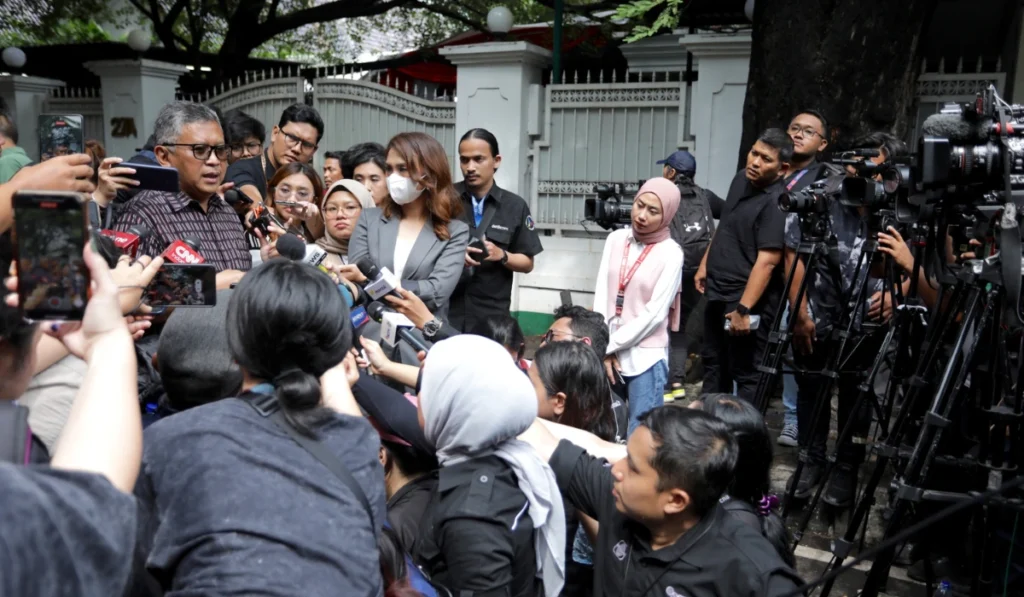
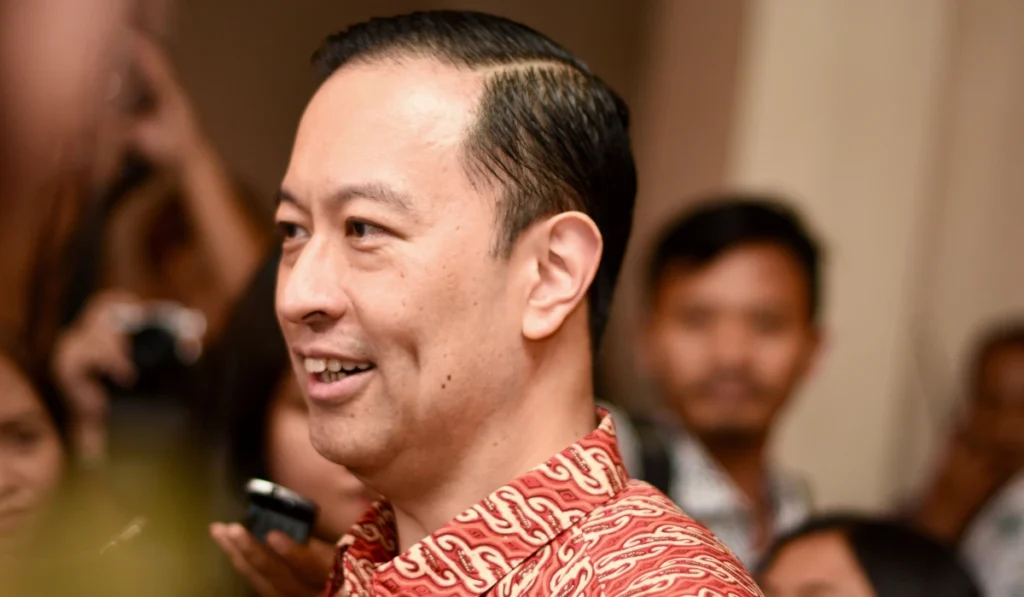
Prerogative is the privilege of the head of state or president. On July 31, 2025, President Prabowo Subianto used prerogative by giving abolition to Tom Lembong, as well as amnesty to Hasto Kristiyanto and 1,116 other convicts of various cases. This step is referred to as an effort to unite the nation. However, what exactly is the prerogative right? And what are the president’s prerogative in the Indonesian legal system?
This article will explore thoroughly related to prerogative, ranging from understanding, legal basis, to pros and cons of the use of prerogative.
Also read: Adagium is: understanding, examples, and functions in law and daily life
Understanding Prerogative Rights
Prerogative is the right possessed by the head of state or president who is special, absolute, and independent given by the constitution in the scope of government power to make decisions or take action in a particular field.
It should be noted that the term prerogative is not listed in the 1945 Constitution of the Republic of Indonesia (“1945 Constitution” or other laws and regulations, because it is more attached to the realm of practice.
Referring to page 72, the decision of the Constitutional Court Number 22/PUU-XIII/2015, states that theoretically, Prerogative Rights are rights possessed by certain institutions, which are independent and absolute in the sense that they cannot be contested by other state institutions. Usually, this prerogative right is owned by the head of state such as the president in certain fields which are stated in the constitution so that it becomes a constitutional authority.
Also read: Mens Rea is: understanding, type, and important role in criminal law
Legal basis for prerogative in Indonesia
In Indonesia, prerogative rights can be found in the 1945 Constitution. Here are some articles in the 1945 Constitution which show the president’s prerogative:
- Article 10 of the 1945 Constitution: The President holds the highest authority over the Army, Navy and Air Force. In this case, the President has the right to determine the TNI Commander with the approval of the DPR.
- Article 11 paragraph (1) of the 1945 Constitution: The President declares war, making peace and agreements with other countries with the approval of the DPR.
- Article 11 Paragraph (2) of the 1945 Constitution: The President makes an international agreement that has a broad and fundamental impact on the lives of the people related to the burden of state finances and/or requires changes or formation of laws, with the approval of the DPR.
- Article 12 of the 1945 Constitution: The President states the state of dangers whose conditions and consequences are determined by the Law.
- Article 13 of the 1945 Constitution: The President appoints ambassadors and consuls and receives the placement of ambassadors from other countries. In terms of appointing the ambassador and receiving the placement of other ambassadors, the president pays attention to the DPR’s consideration.
- Article 14 of the 1945 Constitution: The President gave praksi and rehabilitation with consideration of the Supreme Court and giving amnesty and abolition with the consideration of the DPR.
- Article 15 of the 1945 Constitution: The President gave a degree, a sign of services, and others of the Honorary Signs regulated by the Law.
- Article 17 of the 1945 Constitution: The President appoints and dismisses the Minister and forms, changes and dissolves the State Ministry regulated in the law.
- Article 22 Paragraph (1) of the 1945 Constitution: The President has the right to establish a Government Regulation in Lieu of Law (Perpu) in terms of forcing an forcing intelligence.
- Article 24B paragraph (3) of the 1945 Constitution: The President appoints and dismisses members of the Judicial Commission with the approval of the DPR.
- Article 24C paragraph (3) of the 1945 Constitution: The President proposes three constitutional judges.
These articles indicate that the prerogative of the president in Indonesia is not just a tradition, but a constitutional rights that are recognized and regulated legally. Although some presidential actions require consideration or approval of other institutions, its implementation remains the President’s prerogative as the highest executive power holder.
Also read: Definition of Retroactive in Law: Concepts, Applications, and Impacts
Examples of presidential prerogative in Indonesia
To better understand prerogative, here are some examples of presidential prerogative rights in Indonesia:
Grass
Plemen is the privilege of the president to give forgiveness to someone who has been convicted by the court. Giving this clemency can various forms, such as changing the type of punishment, lightening, reducing, or even removing the punishment that is being undertaken.
Based on Law Number 5 of 2010 concerning Amendments to Law Number 22 of 2002 concerning Porporate, a convict can submit clemency after the court’s decision has permanent legal force. This clemency applies to various types of sentences, such as the death sentence, life imprisonment, or a minimum prison sentence of two years.
An inmate can submit clemency no later than one year after the verdict was handed down. This clemency request will be considered by the Supreme Court (MA) first before finally the president decides.
Amnesty
Amnesty is a form of forgiveness given to individuals or groups for a crime. When amnesty is given, all the legal consequences of these actions, including the sentence that has been handed down, was abolished as if the mistake had never happened.
Giving amnesty is the president’s right that can be given in general or specifically. Based on the Emergency Law Number 11 of 1954 concerning Amnesty and Abolition, Amnesty can be given to a group of certain people or individuals, taking into account the social, political, and state needs.
Abolition
Abolition is an act of stopping the ongoing legal process against someone. This is different from amnesty which is a forgiveness of the sentence that has been handed down. So, abolition canceled the court, while amnesty removed the sentence.
The granting of abolition, or termination of the legal process, must be approved by the House of Representatives (DPR). This is in accordance with Article 14 paragraph (2) of the 1945 Constitution.
Rehabilitation
Rehabilitation is the restoration of the rights of an innocent person after undergoing a wrong legal process, be it an investigation, prosecution, or trial. These rights are returned because the person proved to be innocent. The President has the right to provide rehabilitation based on considerations from the Supreme Court, in accordance with Article 14 paragraph (2) of the 1945 Constitution.
Rehabilitation is given to restore the dignity, position, and rights of someone who is harmed by errors in the legal process. This recovery effort can be in the form of elimination of criminal records or granting compensation for the injustice experienced.
Also read: Novum is: understanding, requirements, and examples in the world of law
However, it should be noted that prerogative rights are not limited to the granting of abolition, amnesty, clemency, and rehabilitation. Referring to the opinion of Mei Susanto in a journal entitled “Development of the meaning of the President’s Prerogative Rights”, the meaning of the president’s prerogative rights in Indonesian state administration can be in the form of:
- Prerogative rights in the hands of the President themselves such as appointing Ministers;
- Prerogative in the hands of the President with the approval of the DPR such as appointing the National Police Chief, Commander of the Indonesian National Army (“TNI”);
- Prerogative rights with the consideration of the DPR and other institutions such as appointing ambassadors, granting pages, amnesty, abolition and rehabilitation.
Also read: Criminal Callia and Prison in the Indonesian Criminal Law System
Comparison of Prerogative Rights in Other Countries
The concept of prerogative is not only in Indonesia. Many countries, especially those who adhere to the presidential government system or constitutional monarchy, also have this right. However, the scope and implementation can vary.
In the United States, the President also has prerogative, such as veto and the right to appoint the Cabinet Minister and Supreme Court Justices. However, this appointment often requires approval from the Senate, indicating the existence of the system Check and balance the strong one.
Whereas in England, the King or Queen of England has a very broad prerogative right historically, but in practice, this power is carried out on the advice of the Prime Minister. This makes prerogative in the UK more ceremonial and symbolic.
This difference shows that although the basic concept is the same, the implementation of prerogative rights is strongly influenced by the political system and constitution of each country.
Also read: Frames and Penalties in Criminal Law
Pros and cons in the use of prerogative rights
The use of prerogative rights often cause debate. There are arguments that support and oppose this power. Generally, the pros and cons that occur as follows:
Pro
- Government efficiency, which allows the head of state to act quickly, especially in an emergency situation, without having to wait for a long legislation process.
- Political stability, because it can provide the Head of State Authority needed to maintain the stability and smoothness of government.
- Strong leadership, allows leaders to make strong decisions for the benefit of the nation.
Oppose
- Potential abuse, because great power without strict supervision has the potential to be misused for personal or group interests.
- Lack of transparency, can lead to decisions made through prerogative rights often lacking transparent because it is not through public debate or parliamentary approval.
- Triggering authoritarianism, because the excessive use of this right can lead to authoritarian governance.
In Indonesia, supervision of the use of the president’s prerogative is carried out through various mechanisms, such as judicial review by the Constitutional Court and political supervision from the DPR, to prevent abuse of power.
By understanding what prerogative is, we can be more critical in seeing the policies taken by a leader, as well as understanding the importance of the legal system and supervision in maintaining the balance of power.
Also read: Restorative Justice in Criminal Law: Understanding, Legal Basis, and Case Examples
Perqara has served more than 30,000 legal consultations
There are hundreds of perqara advocate partners with special expertise in each of their fields such as employment, marriage and divorce, land, and many more. Thus, clients can consult other legal issues in accordance with the problems being experienced.
Online Legal Consultation in Perqara
If you have a legal problem or further questions related to prerogative rights is, you can chat directly with professional advocates for free only in Perqara. Download the Perqara application now and get a free legal consultation to get the right legal solution anytime and anywhere.
Also read: Human Rights and Press Freedom: Pillars of Democracy
(This article has been edited by the perqara editorial team)
Legal basis
- The 1945 Constitution of the Republic of Indonesia;
- Law Number 5 of 2010 concerning Amendment to Law Number 22 of 2002 concerning Ples;
- Emergency Law Number 11 of 1954 concerning Amnesty and Abolition;
- Decision of the Constitutional Court Number 22/PUU-XIII/2015
Reference;
- May Susanto. The development of the meaning of the president’s prerogative rights. Journal of Judicial, Vol. 9 No. December 3, 2016.
- Teguh Satrio Prakoso. Implementation of President’s Prerogative Rights. Journal of Dharmasisisya, Vol. 1 No. 3 September 2021.
Game Center
Game News
Review Film
Rumus Matematika
Anime Batch
Berita Terkini
Berita Terkini
Berita Terkini
Berita Terkini
review anime
Gaming Center
Originally posted 2025-08-12 11:26:45.