Force Majeure is a term in civil law commonly used in business agreements to protect the parties from risks due to events outside of human control. In practice the clause Force Majeure Often neglected, even though its role is very crucial to anticipate things that have the potential to cause losses in the future. Then, what is it Force Majeure? This article will review the understanding, type, legal basis, and concrete example of its application in the agreement.
Also read: Situ is: Definition, Function, and How to Cainted it for your business
What’s that Force Majeure?
Force Majeure It is a situation where the debtor is hindered to carry out his achievements because an unexpected event or condition will occur when the contract is made. The incident was beyond the control of the parties and could not be predicted or prevented.
In this concept, the failure of the debtor in fulfilling its obligations does not necessarily make it legally responsible for the event as long as he does not act in a bad faith.
Also read: Profitable owner: Understanding, function, and its rules in the business world
Legal basis Force Majeure in Indonesia

Legal basis Force Majeure In the Indonesian legal system listed in the Civil Code (“Civil Code”), namely:
- Article 1244 Civil Code: Regulates the terms and consequences if the debtor cannot prove Force Majeure (still obligatory compensation).
- Article 1245 Civil Code: Regulates the release of debtors from compensation obligations if proven to occur Force Majeure.
Also read: Compensation in civil law: type, legal basis, and case example
Condition Force Majeure in Indonesia
So that an event can be categorized as Force Majeure and freeing one or both parties from the contractual obligation, there are several main conditions that generally must be met, including:
- An unexpected event occurred
The event cannot be predicted or prevented by the parties.
- Cannot be held accountable
The debtor is not obliged to pay compensation because the failure of achievement is caused by conditions outside of its control.
- Parties -Party is not in a bad duck
Failure to carry out obligations not because of negligence or bad intentions of the claim Force Majeure.
- Hampering the implementation of obligations
These events make contractual obligations cannot be met, both overall or in part.
- Is a situation regulated in law
The event is included in the category that is recognized as Force Majeure According to the applicable legal provisions.
Also read: Conditional engagement in civil law: understanding, type, and case example
Type Force Majeure
Based on Civil Code and Civil Law Doctrine, type Force Majeure is:
- Force Majeure absolute
Is a condition where the debtor’s rights and obligations cannot be done at all under any conditions. This condition is often referred to as impossibility.
- Force Majeure relatively
Is a situation where the fulfillment of rights and obligations cannot be done normally, but it may still be done in other ways. This condition is often referred to as Not practical.
Also read: What is Daluwarta (Verjaring)? Understand the difference in criminal and civil law
Examples of incidents Force Majeure
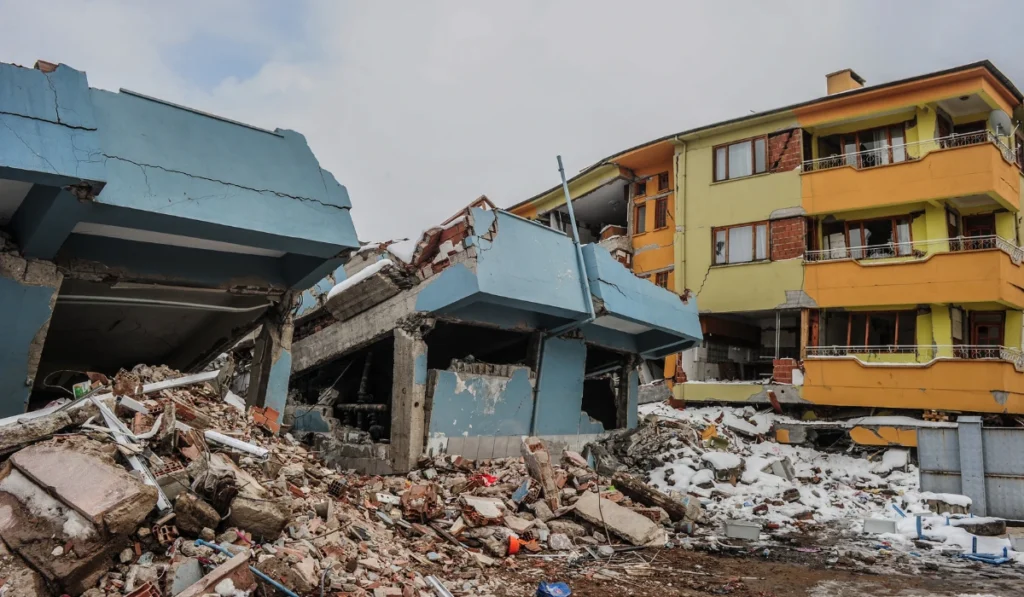
Examples of incidents Force Majeure are as follows:
- Force Majeure absolute
Natural disasters occur in the form of earthquakes, large floods, volcanic eruptions, drought, or large fires, which cause the object of the agreement to be destroyed in total so that achievement cannot be carried out at all and the engagement is permanently canceled.
- Force Majeure relatively
There is a change in regulations or government policies that are temporary and limit or prohibit the implementation of obligations, such as the prohibition of exports/imports so that the implementation of achievements is only delayed and does not cause permanent engagement to cancel.
Also read: Sample contract agreement letter
Legal consequences from Force Majeure
Force Majeure In an agreement, a significant legal consequences for the parties involved. The unexpected situation that arises can obstruct the implementation of the obligations of the parties so that it has an impact on the continuity of the engagement and the division of risks between the parties. As for some legal consequences Force Majeure is :
- Creditors cannot demand fulfillment of achievements.
- The debtor is not considered negligent and is not required to pay compensation.
- The risk of not turning to debtors.
- Creditors cannot demand cancellation in the reciprocal agreement.
Also read: E-Court: Faster and Easier Court Solution
The importance of including clauses Force Majeure in the contract
In writing a contract it is very important to include a clause Force Majeure inside it. The existence of this clause provides certainty and legal protection for both parties in the event of an unexpected event that is out of their control.
The lights of the clause Force Majeure Serves to anticipate losses or legal disputes that may arise if an unexpected event occurs. This is because the inclusion of the clause explicitly stipulates that if it happens Force Majeure And one of the parties cannot meet his achievements, then this will not be considered a contract violation.
Thus, this clause does not only regulate the release of some or all of the contractual obligations when Force Majeure Occurs, but also protects the parties from unwanted legal consequences due to the inability to meet the agreement in an unexpected state.
Also Read: What Is Default in Civil Law? Let’s understand together!
Perqara has served more than 27,700 legal consultations
For legal issues related to civil, Perqara has handled more than 7,000 cases. There are hundreds of perqara advocate partners with special expertise in each of their fields such as employment, marriage and divorce, land, and many more. Thus, clients can consult other legal issues in accordance with the problems being experienced.
Online Legal Consultation in Perqara
If you have legal problems related to this problem, you can chat directly with professional advocates for free only in Perqara. Download the Perqara application now and get a free legal consultation to get the right legal solution anytime and anywhere.
Also read: Acts against the law: understanding, elements, legal basis, and case examples
(This article has been edited by the perqara editorial team)
Legal basis
- Civil Code Book
Reference
- Subekti, Agreement lawJakarta: InterMasa, 2005.
- Agri Chairunisa Isradjuningtias, “Force Majeure (Force Majeur) In Indonesian contract (agreement) “, Journal of Law “Veritas et Justitia”Vol.1, No.1, (2015).
- Erniwati, “conception Force Majeure In the contract/agreement in the pandemic period “, Scientific Journal of Master of Law “Sol Jucticia”, Vol. 3, No.2, (2020).
- Niru Anita Sinaga, “Perspective Force Majeure And Things to do In the Indonesian legal system “, Dirgantara Law Scientific Journal, Vol. 11, No.1, (2020).
Game Center
Game News
Review Film
Rumus Matematika
Anime Batch
Berita Terkini
Berita Terkini
Berita Terkini
Berita Terkini
review anime
Gaming Center
Originally posted 2025-06-17 12:35:53.